Converting your Pilot’s Licence to a Canadian CPLH
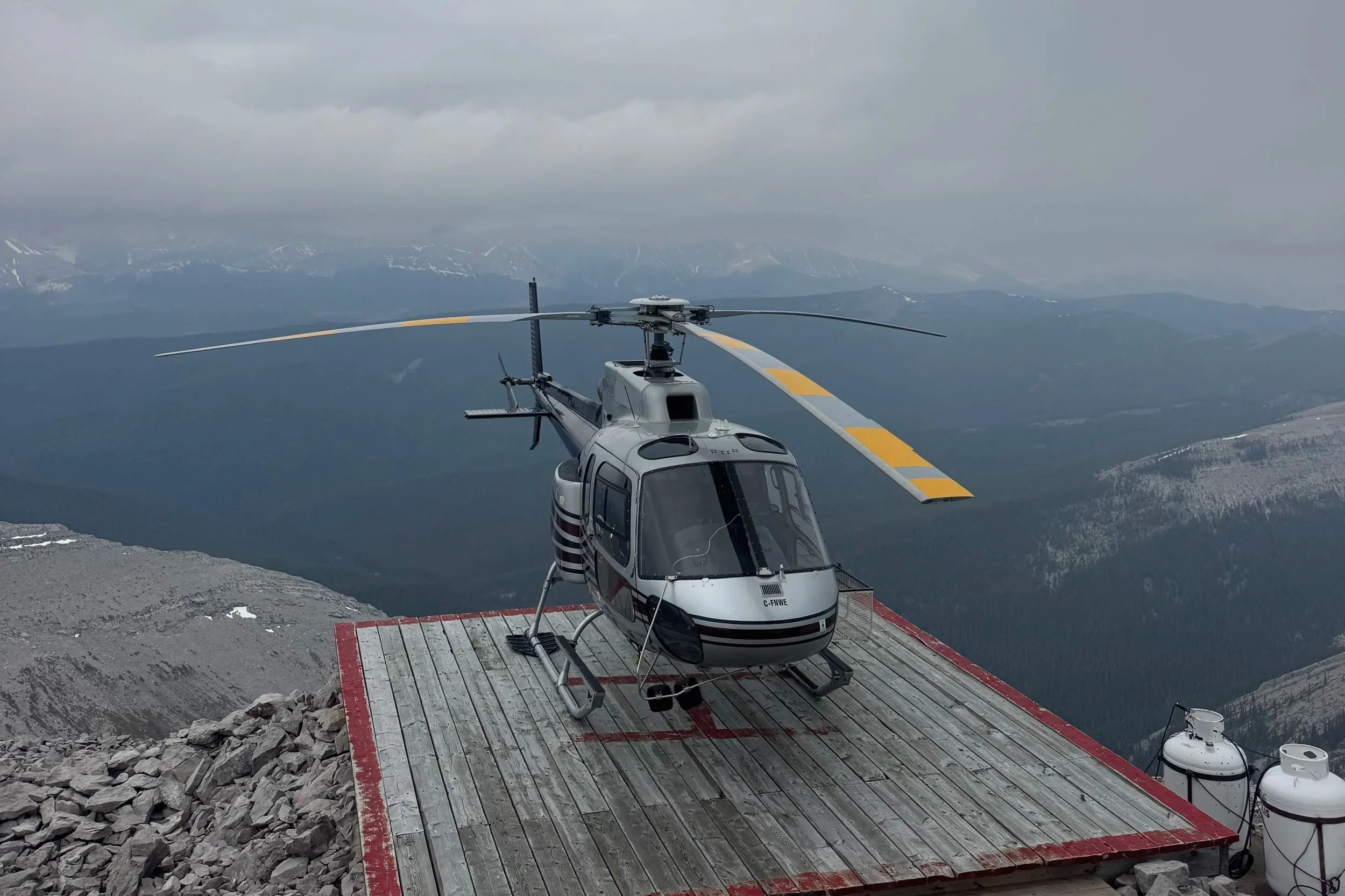
It is almost a rite of passage for Aussies and Kiwis to book themselves in for a working holiday visa in Canada at some point during their 20s or early 30s. With a relatively easy 2 year visa process, lots of flying opportunity and more helicopters than you can poke a stick at, a stint in Canada is becoming an increasingly popular option for young pilots from the land down under.
Now that I have been through the foreign licence conversion process in Canada myself, I’ll break down a little bit about the process and the things I wish I’d known before coming over.
It is a relatively straightforward process for anyone who already possess a Commercial Helicopter Licence in an ICAO Country. A summary of what you need is listed below and I will break them down further following.
At least 100 hours flight time in a helicopter, to the requirements of TCAA CPL minimums
A valid Class 1 Canadian Medical
To pass the Canadian CPHEL theory exam
To pass a TCAA CPL flight examination
The transport Canada flight minimums for licensing are listed in their Canadian Aviation Regulations . Make sure to have a read through these as requirements can change but as a summary the requirements are; 55 hours dual, 35 hours solo, 10 hours PIC cross country and 10 hours dual instrument time.
The solo cross country time must include at least one 2 hour cross country flight to a point a minimum of 45 minutes flight time at normal cruising speed from the point of departure, including a minimum of 3 landings at points other than the point of departure.
The instrument time must include a minimum of 5 hours trained in a helicopter and maximum of 5 hours trained in a simulator or plane can contribute to the 10 total. Many convertee’s will opt to do 5 hours of their instrument in an approved flight sim - either in their home country or on arrival to Canada. Victoria Flying Club is one of multiple schools which offers a fixed wing sim which is a popular option for those doing their helicopter flight training nearby. Training in Canada offers the option to compete instrument training in an R22, so it may be a good option to do this training after arriving in Canada, allowing more time to become comfortable and learn the rules around Canadian airspace and laws. If you already have the time logged back home however, the hours will suffice and will be confirmed by Transport Canada upon application for your Canadian pilots licence.
The first 2 things you should be organising well in advance of coming to Canada to fly are a - your visa and b - your Class 1 medical. The visa process has a few steps to it and you can find all the most correct information here. I won’t do a full breakdown of the visa process but there was a few timeline details that I would have appreciated knowing before applying for my visa. The two most notable being one, that once you are accepted into the application pool, you have 30 days to provide your biometrics to maintain your application moving forward. In Australia you must travel to either Perth or Melbourne for this appointment, in New Zealand, Auckland is your only option. So if you live far away from these places you will need to factor this biometrics trip into your schedule before entering your application, once the process is rolling, it is best to not try to start over. The second timeline detail being, once your application is approved, you must enter the country to start your visa within 12 months.
I would strongly advise to complete your Class 1 medical while still in Australia as wait times for medicals can drag out to many months. A google search will help you find the CAME (Canadian Aviation Medical Examiner) in a city nearest to you. I had my medical posted to my address in Australia from Canada and it arrived in about 6 weeks - but this of course varies depending on processing at any particular time. You also must have a Medical before you can sit your CPHEL exam in Canada. The number printed at the top of your medical will be your aviation licence number in Canada.
The next step is to study for and book in your theory exam. This must be completed in Canada and can be booked here. You must have your licence number from your medical before you can book the exam. I also recommend booking as far in advance as you can as the exam slots are limited and book out quickly. The CPHEL exam is a single 100 question multiple choice exam with a time cap of 3.5 hours. A passing score of 60% or more is required across all 4 subjects throughout the exam (meteorology, air law, navigation and general aeronautics). I found the exam to be easier than that of the Australian CPL exams. The CAR study guide is linked here but there is a series of practice exams which have questions that are extremely similar to the real thing - your chosen flight school should be able to email these to you to self study. If you can smash all of these practice exams, you should have no dramas passing. The exam invigilator will provide all the necessary maps, documents and stationary but you need to bring your own calculator and/or flight computer.
Once you’ve arrived at your flight school they will get you to sit a PSTAR and ROC-A radio licence exam in house. The flight school should give you any necessary study material for these exams but you can also find practice exams online. These paper based exams can be re-sat if you don’t make the 90% marks the first try.
Now for the fun part - get flying! Provided you already have the correct instrument time logged, your flight school will require you to sit at least one lesson with an instructor and potentially more until they are satisfied that you are up to scratch before they can recommend you for a flight test. The flight test consists of a spoken ground theory portion, a navigation portion, a simulated instrument exercise where you will be required to perform some basic manoeuvres wearing foggles, as well as all the standard general handling and emergency procedures testing for a total of 1.5+ hours of flying. I have linked the full requirements for the flight test.
Once you have passed your exam, your flight school will help you to submit all the required documents for your pilots licence. You cannot fly until you have your physical licence approved and back to you and this processing time can vary widely - up to 3 months. I was able to call Transport Canada to get a current processing time, which at the time I submitted my licence (the beginning of spring) was 40 working days. Many pilots may opt to enter the country on a tourist visa for the duration of the training and not activate their working visa until their licence is approved, in order to get the most from the 2 year visa. It is also possible to be granted a temporary licence for a fee from select TC examiners. The temporary licence is valid for 90 days meaning you can begin working immediately while your permanent licence is still being processed. At the time of writing, some Transport Canada representatives are charging approximately $1000 for this temporary licence.
More helpful hints
The OzRunways equivalent in Canada is an app called Foreflight. It carries most of the same flight planning, weather and airport information and works very similarly.
For a type rating to be transferred from your Australian licence, you must have at least 10 hours of PIC time logged on type in the last 12 months or it will not be included on your Canadian licence.
Transport Canada does offer the option of a licence validation which would allow a person to fly in Canada on their home country licence and medical for a period of time, it however may limit your employment options as many employers will not hire without a full Canadian licence.
Some employers will want you to hold a certificate for an approved mountain course as this is a requirement to fight fire in British Colombia and Western Alberta. If you hold an NZ licence, your mountain course should suffice, but of course - you should follow up on this on an individual basis.
The most popular season for hiring seems to be during the spring around March/April, leading into the busier Canadian summer.
There is lots of demand for experienced pilots here in Canada but it is still extremely competitive for those starting out so a minimum of 1000 hours experience is recommended before investing in a licence conversion.
I hope this has helped anyone who’s thinking about taking the leap overseas! Please don’t be afraid to reach out with further questions (or corrections) on this post. I have done my best to convey my experience and view on the process of converting my flight crew licence but please don’t take it as gospel and do your own further research.
Fly safe friends 💙